What Will I Look Like When I'm Older? How Aging Works and How to Preview It

Maybe you caught your reflection in a shop window and noticed a new line near your eyes. Maybe you saw an old photo of a family member at your age and wondered if you'll look the same one day. Either way, the question is a natural one, and almost everyone asks it at some point, "What will I look like when I'm older?"
Nobody can show you your exact future face, but you can learn a lot from how faces change over time and which habits change the speed of aging. This guide walks you through the science of facial aging in simple words, the clues that hint at how you might age, and a simple way to preview an older version of your face with AI.
How Does a Face Change With Age?
Aging affects every layer of the face, not just the skin. Dermatologists split it into 2 types. Intrinsic aging is the natural process driven by time and genes, while extrinsic aging comes from outside factors like sun and smoking, according to the American Academy of Dermatology.
Here's what changes over the years.
Skin gets thinner and less springy. From early adulthood, the body slowly makes less collagen and elastin, the proteins that keep skin firm and flexible. As collagen drops, your skin turns thinner and drier, and you start to notice fine lines around the eyes and mouth, plus pillow creases that take longer to fade in the morning.
Expression lines become permanent. Smiling, frowning and squinting fold the skin in the same places thousands of times. As skin loses its bounce, those folds stay visible even when your face is relaxed.
Facial fat shifts and shrinks. Young faces have full fat pads in the cheeks and around the eyes. With age, these pads shrink and slide downward, which can make the cheeks look flatter and the area around the mouth and jaw look heavier.
Face bones get smaller. The bones under your face slowly shrink with age, mostly around the eyes, cheeks and jaw. With less bone underneath, your skin has less support, so the face starts to droop and the jawline looks less sharp.
Color and texture change. Sun exposure over many years leads to age spots, uneven tone and rougher texture. Hair also loses pigment and turns gray or white, often starting in the 30s or 40s.
What Makes Some People Look Older?
Genes set the starting point, but daily habits shape how fast the changes appear. The American Academy of Dermatology points to several outside factors that speed up skin aging.
| Factor | How it affects your face |
|---|---|
| Sun exposure | Breaks down collagen and causes wrinkles, age spots and uneven skin tone |
| Smoking | Speeds up wrinkles and gives skin a dull, yellowish tone |
| Indoor tanning | Exposes skin to strong UV light that causes premature aging |
| Repeated squinting | Deepens lines around the eyes over time |
| Poor sleep and stress | Can leave skin looking tired and dull |
| Diet high in sugar | Research suggests sugar and refined carbs may speed up skin aging |
| Rough skin care | Scrubbing and irritation speed up visible aging |
The good news is that many of these factors are in your control. The AAD recommends daily broad-spectrum sunscreen, avoiding indoor tanning, not smoking, wearing sunglasses to reduce squinting, eating plenty of fruits and vegetables, and cleansing your skin gently. If changes in your skin worry you, a board-certified dermatologist can give advice based on your skin.
Clues That Hint at How You'll Age
You can't see the future, but a few clues give you a rough idea of what your older face might look like.
Look at older family photos. Faces often age in similar ways within a family, because bone structure, skin type and hair patterns are partly inherited. Photos of older family members at different ages can show how features like cheekbones, jawlines and hairlines changed over time.
Notice your expression lines today. Lines that show when you smile, frown or raise your eyebrows often mark where deeper lines may form in the coming years.
Think about your sun history. Years of sun exposure without protection usually show up as wrinkles and spots earlier than they would otherwise.
Pay attention to your skin type. Very fair skin tends to show sun damage and fine lines earlier, while deeper skin tones often show wrinkles later but may develop uneven pigment.
If you have faded or damaged older family photos to look through, Aragon's Photo Restoration tool repairs scratches, creases and faded color, so you can see the faces clearly and compare features side by side.
What Will I Look Like When I'm Older? Try an AI Age Filter
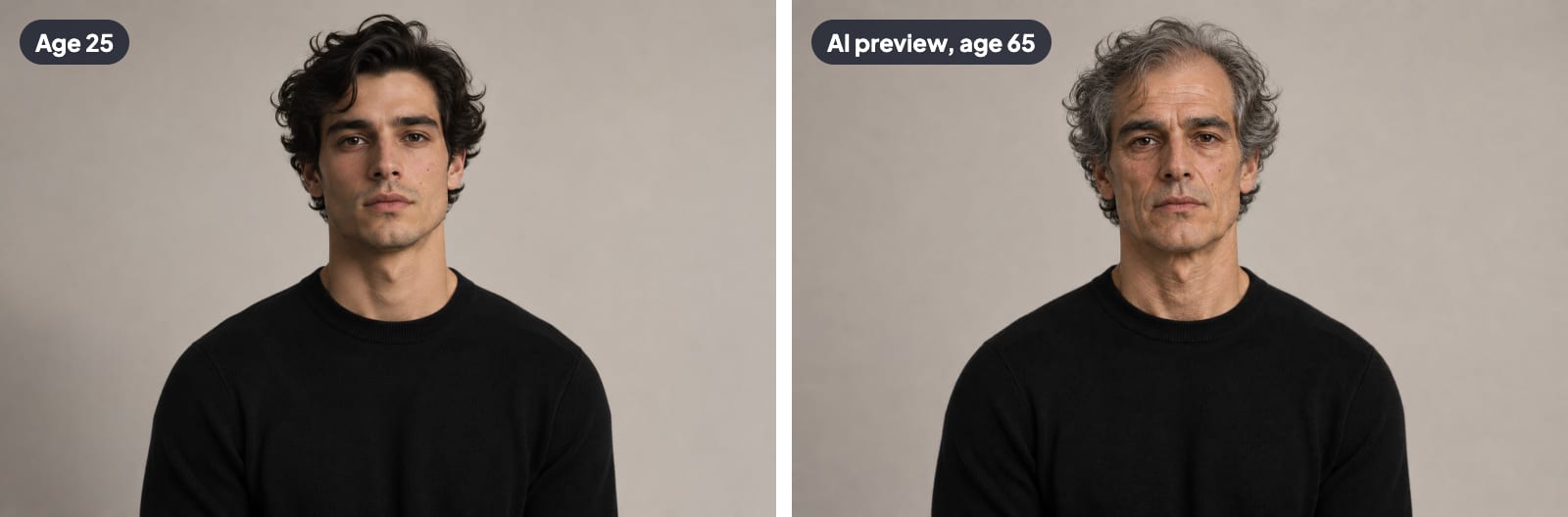
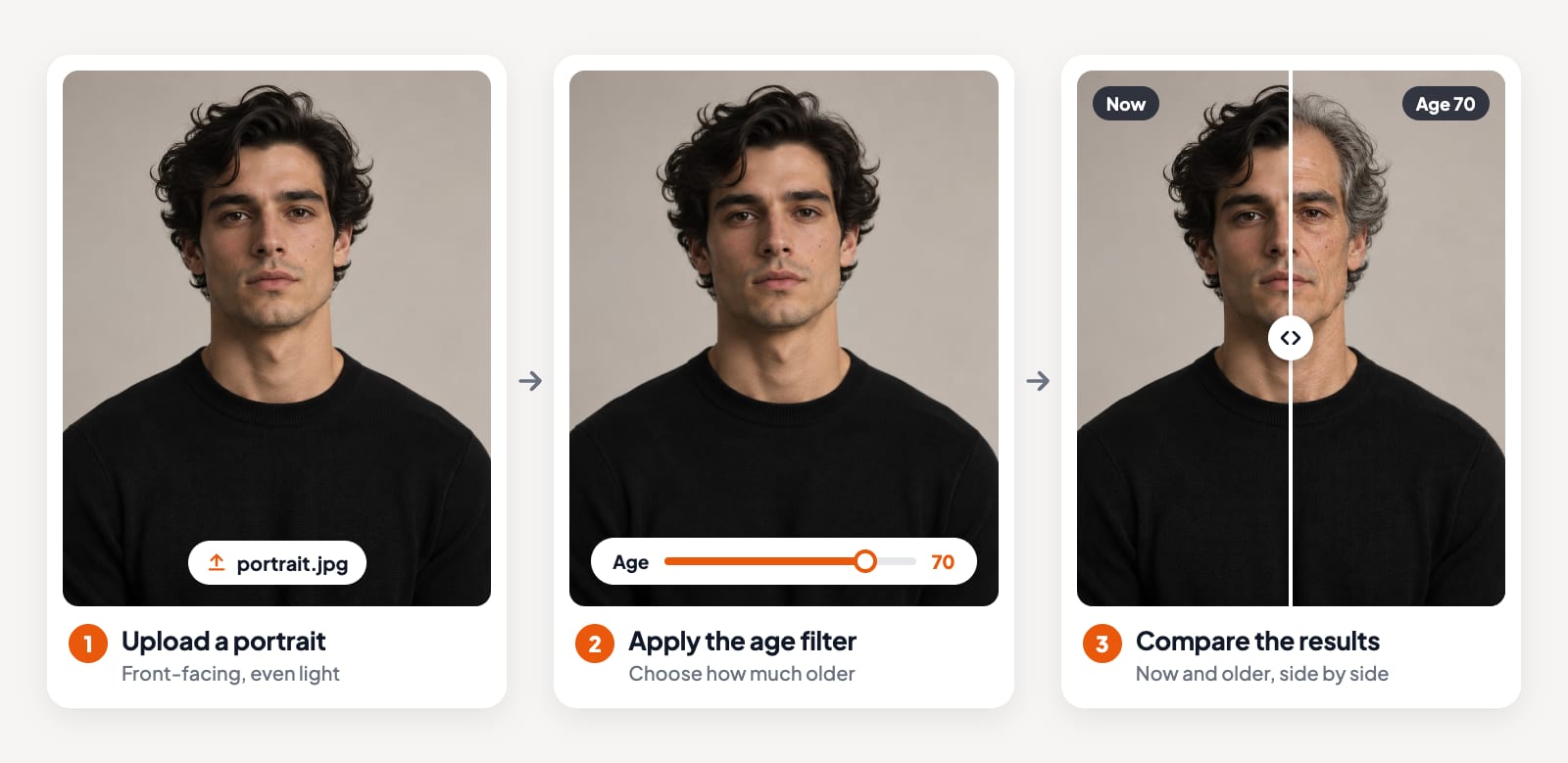
The easiest way to preview an older version of your face is with an AI age filter. These tools study your face in a photo and add the visual signs of aging, like wrinkles, gray hair, thinner skin and a less sharp jawline.
Aragon's Aged Filter shows you older or younger in a photo you upload. Here's how to get the most realistic preview.
- Choose a clear, front-facing photo. Good lighting and a neutral or relaxed expression give the AI the best view of your features.
- Avoid heavy filters or makeup. A natural photo gives the AI an accurate starting point.
- Upload the photo and apply the filter. The tool creates an aged version of your face.
- Compare the result with older family photos. Looking at both side by side makes the preview more meaningful.
It's important to know the limits of an age filter. Different photos of the same person can generate slightly different results, because lighting, camera angle and expression all change how the AI reads your features. Trying 2 or 3 photos gives you a broader picture of the possible changes. The result is an illustration of common aging changes, not a scientific or medical prediction of your future face. Your real aging depends on genes, health, habits and many other factors no photo can capture.
More Ways to Use an AI Age Filter
An age filter is useful for more than satisfying your curiosity, from social media posts and birthday surprises to side-by-side comparisons with your current photos.
- Create a then and now post. Pair a current photo with an aged version for a social media post.
- Make a birthday surprise. Show a friend an older version of their face on a milestone birthday.
- See younger versions too. The same tool can show you younger, which makes for great throwback comparisons. For a full baby look, Aragon's Baby Filter turns a face into a baby version.
- Bring the preview to life. Aragon's Image to Video tool turns a still photo into a short video clip, like a slow smile or a turn of the head.
Small Habits That Help You Age Well
Whatever your genes say, a few daily habits make a real difference in how your skin looks over the years. These tips come from dermatologist recommendations.
Wear sunscreen every day. Use a broad-spectrum sunscreen with SPF 30 or higher, even on cloudy days.
Protect your eyes. Wear sunglasses and a wide-brim hat, because the thin skin around your eyes often wrinkles before the rest of your face.
Don't smoke. Quitting at any age helps your skin, along with the rest of your health.
Eat a balanced diet. Plenty of fruits and vegetables may help protect skin from damage.
Be gentle with your skin. Use a mild cleanser and moisturize daily instead of scrubbing hard.
Sleep well and manage stress. Rest and recovery help your skin look fresh and healthy.
Your Future Face Is Partly in Your Hands
So, how will you look in the years ahead? Your genes set the outline, and your habits fill in the details. Skin thins, fat shifts, bones change and expression lines deepen over time, but sun protection and healthy habits slow many of those changes.
If you're curious about a preview, Aragon lets you try an AI age filter on your photo in a few clicks. Just remember the result is an illustration, not a crystal ball.
Related Aragon Tools
- Facial Expression Editor changes the expression on a face in a photo.
- Photo Enhancer improves the overall clarity and quality of your photos.
Related Reading
FAQs About How You'll Look When You're Older
How can I see what I will look like when I'm older?
Use an AI age filter on a clear, front-facing photo of your face. The tool adds common signs of aging, like wrinkles and gray hair, to show an illustration of your face.
Are age filters accurate?
Age filters show common aging changes, but they can't predict your exact future face. Your real aging depends on your genes, health, sun exposure and lifestyle, so treat the result as an illustration rather than a forecast.
At what age does your face change the most?
There isn't one single age, since facial changes build gradually over decades. Many people first notice fine lines in their 30s, and changes in volume, skin texture and facial shape often become more visible in the 40s and 50s.
Will I age like the people in my family?
You may share some features, because bone structure, skin type and hair patterns are partly inherited. Your habits, especially sun protection and smoking, also play a big role in how closely your aging follows the family pattern.
Can you slow down facial aging?
You can't stop natural aging, but you can slow the visible signs. Daily sunscreen, not smoking, a balanced diet and gentle skin care are among the most effective habits, according to dermatologists.